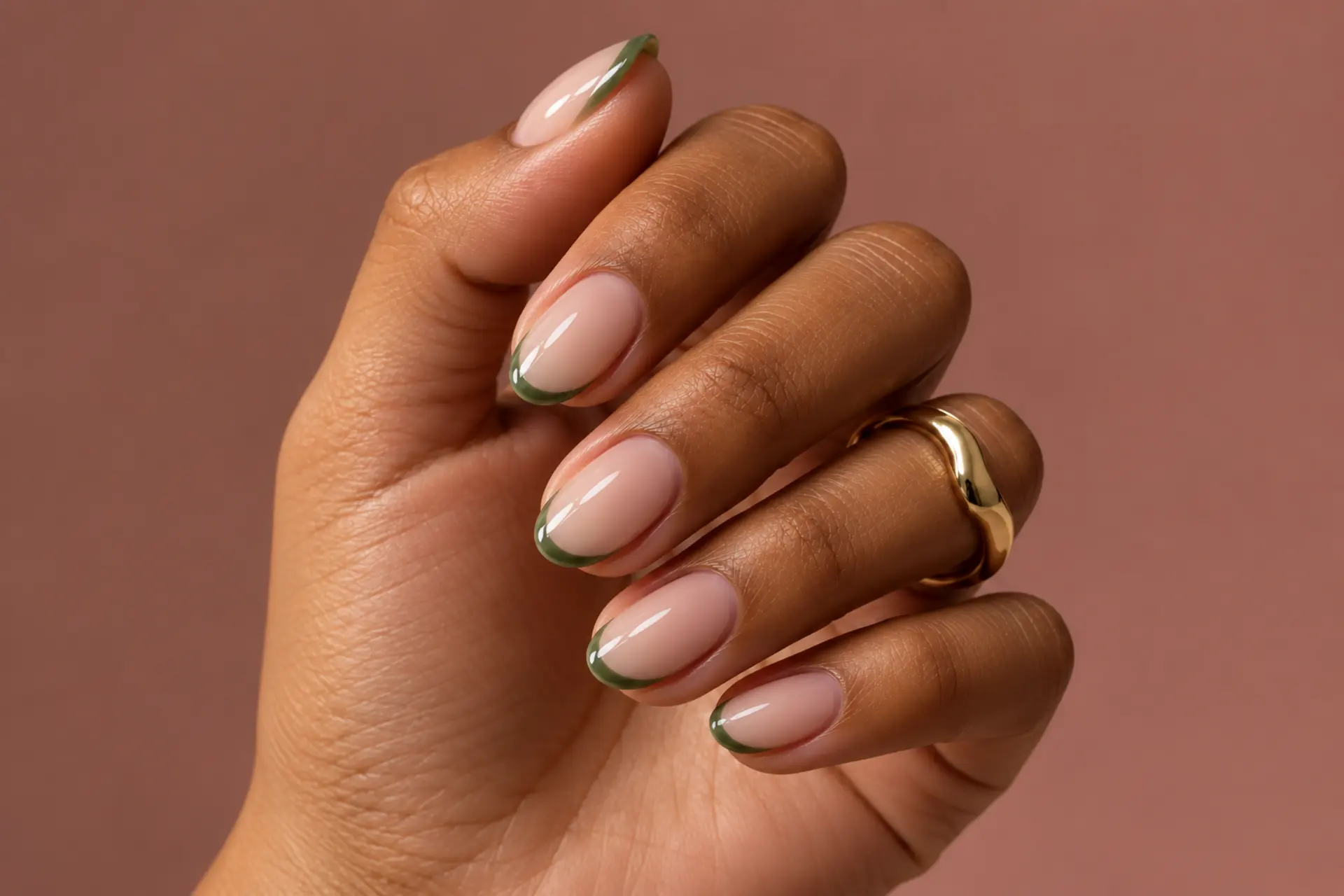
Green nails can feel soft or dramatic depending on the shade: sage and muted olive are subtle, while emerald and forest green are richer. Choose a smooth glossy finish for color-first looks, or try a fine French tip, jelly wash or controlled chrome detail to change the texture.
Sage, olive, moss, emerald, and forest green sit in very different parts of the palette. Sage High-Gloss Solid highlights even full-coverage color; Green Sheer Jelly Wash instead offers translucent color with visible nail underneath. These choices produce different effects even within one color story.
A sage solid is restful; an emerald jelly looks like colored glass; a forest-green magnetic polish adds depth without a second hue. Test undertones against your skin in daylight before deciding which photo to copy.
Look closely at Green Reverse French before choosing a final reference: its crescent near the cuticle may need to be scaled for your preferred length. Consider whether you want a continuous solid color or just a small accent.
sage, olive, moss, eucalyptus, and forest green
medium-short soft almond or squoval, realistic and wearable
Decide whether you prefer even full-coverage color or translucent color with visible nail underneath before asking for extra art.
Sage High-Gloss Solid
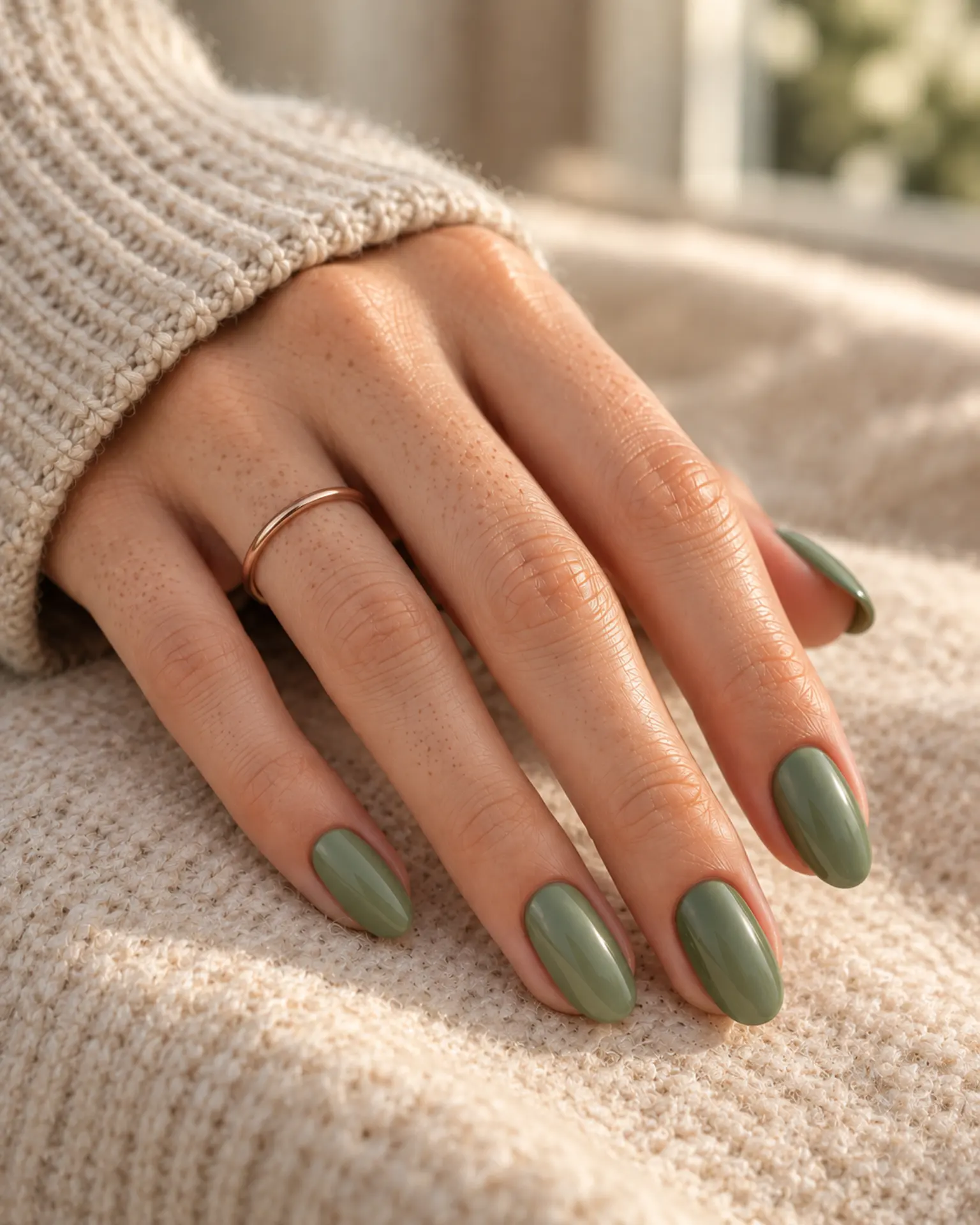
Smooth, consistent color and a clean cuticle edge become the entire design. Sage High-Gloss Solid feels more considered when you account for the shade: sage has a dusty, grayed green softness that works well in small accents. Check the shade in daylight before finishing the whole set.
Olive Micro French
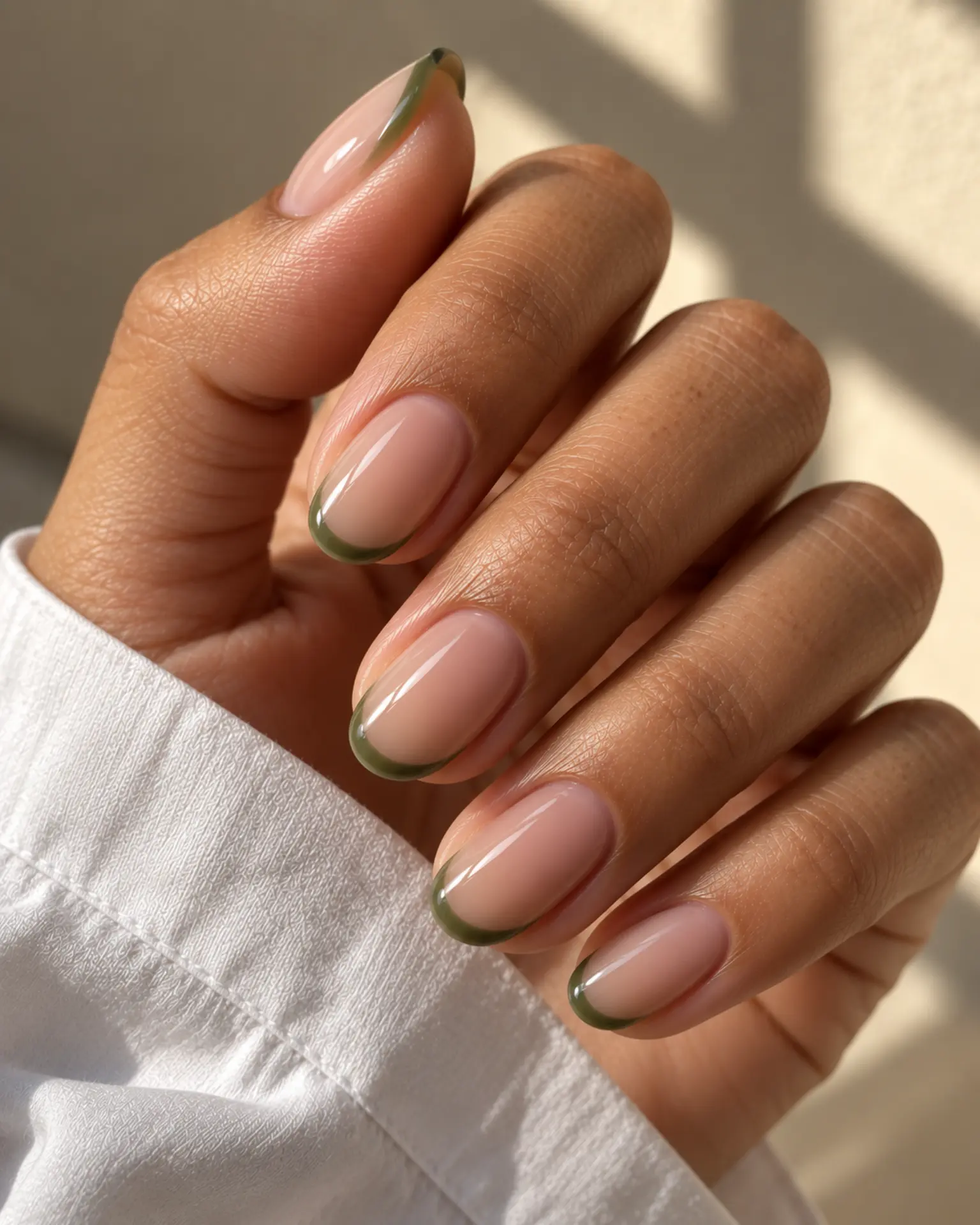
The success of a micro French depends on how slender the tip stays. Too much product quickly turns it into a full-width band. Before adding extra details to Olive Micro French, check the undertone. Olive has yellow-green warmth that pairs naturally with bronze or cream. A clean base and even topcoat let the chosen undertone do more of the work.
Moss Soft Aura
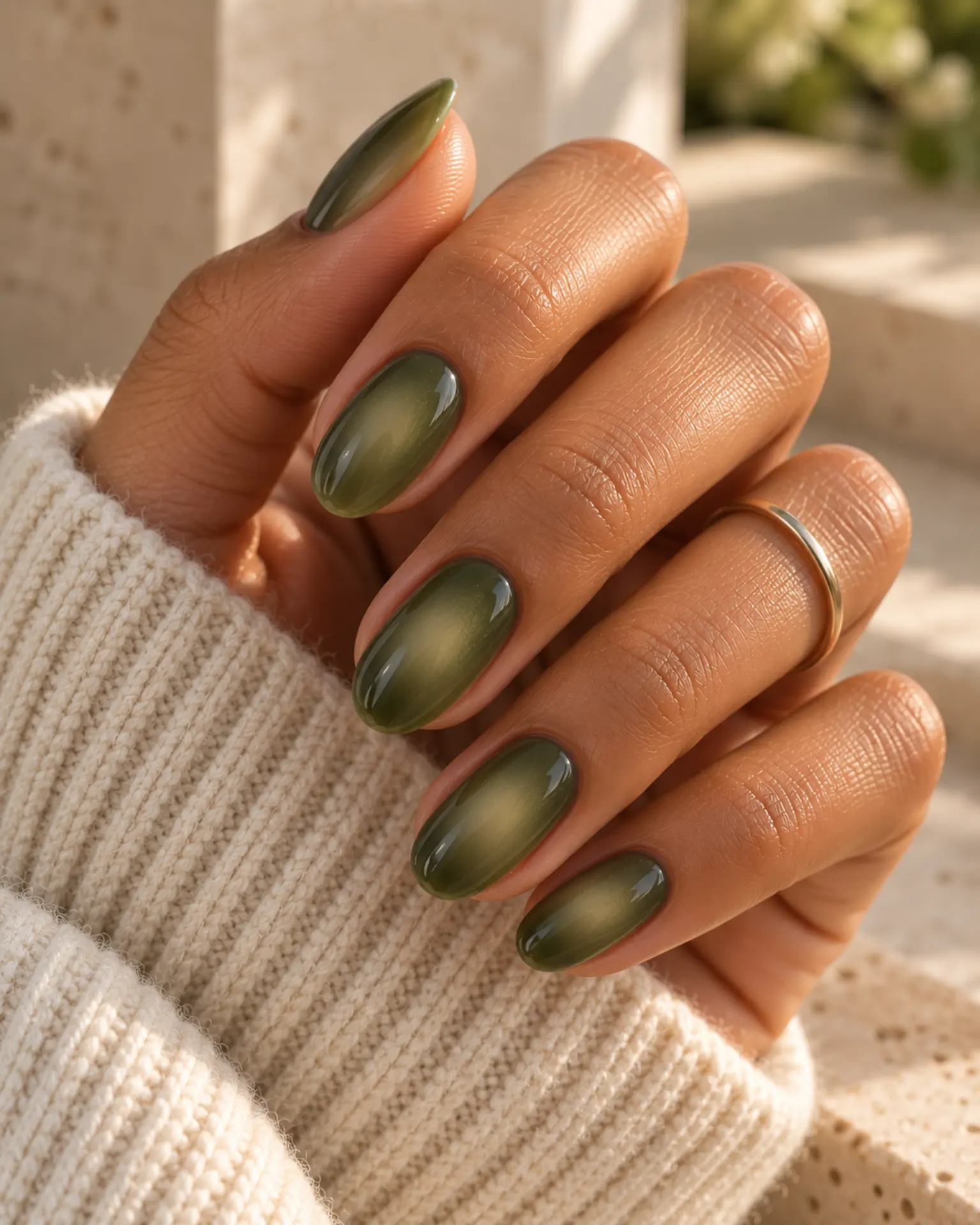
A blurred center of color creates a glow that fades gently toward the edges, with no hard circular border. Moss green is more muted than jewel-tone emerald. That is an important part of the look in Moss Soft Aura. Match the accent size to the nail plate rather than forcing the same dimensions on every finger.
Emerald Jelly Wash
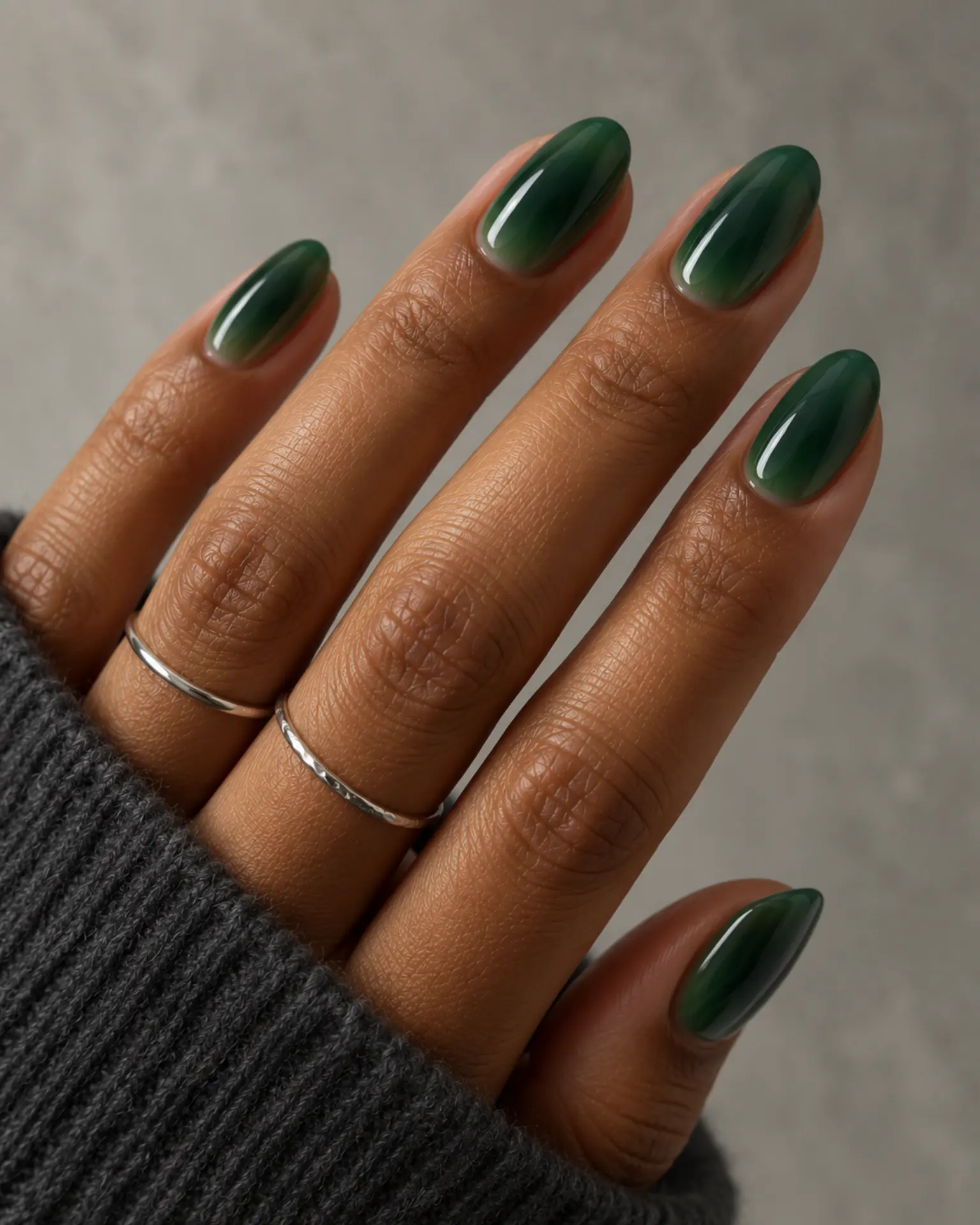
Emerald Jelly Wash feels more considered when you account for the shade: emerald stays vivid even when the overall design is simple. Translucent layers create a colored-glass effect rather than a solid opaque block. The nail underneath is meant to show through. Ask for clean coverage around the cuticle rather than extra ornament.
Forest Green Velvet Cat-Eye
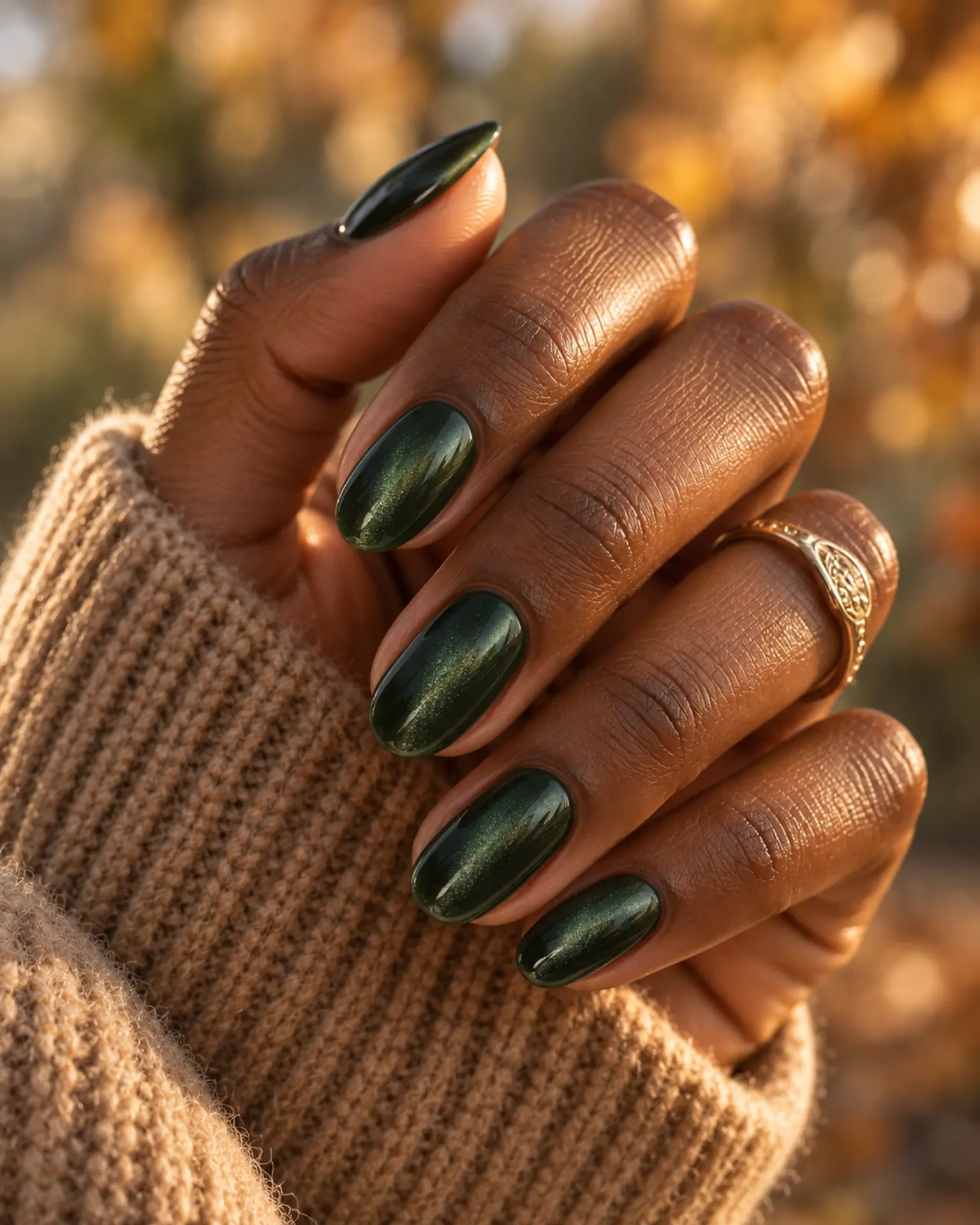
A magnetic shimmer forms a soft shifting beam when light moves across the nail. The direction of that beam is part of the design. Forest green is a deep pine shade that can look nearly black indoors. That is an important part of the look in Forest Green Velvet Cat-Eye. Look from different angles before the polish is cured.
Sage Chrome Glaze
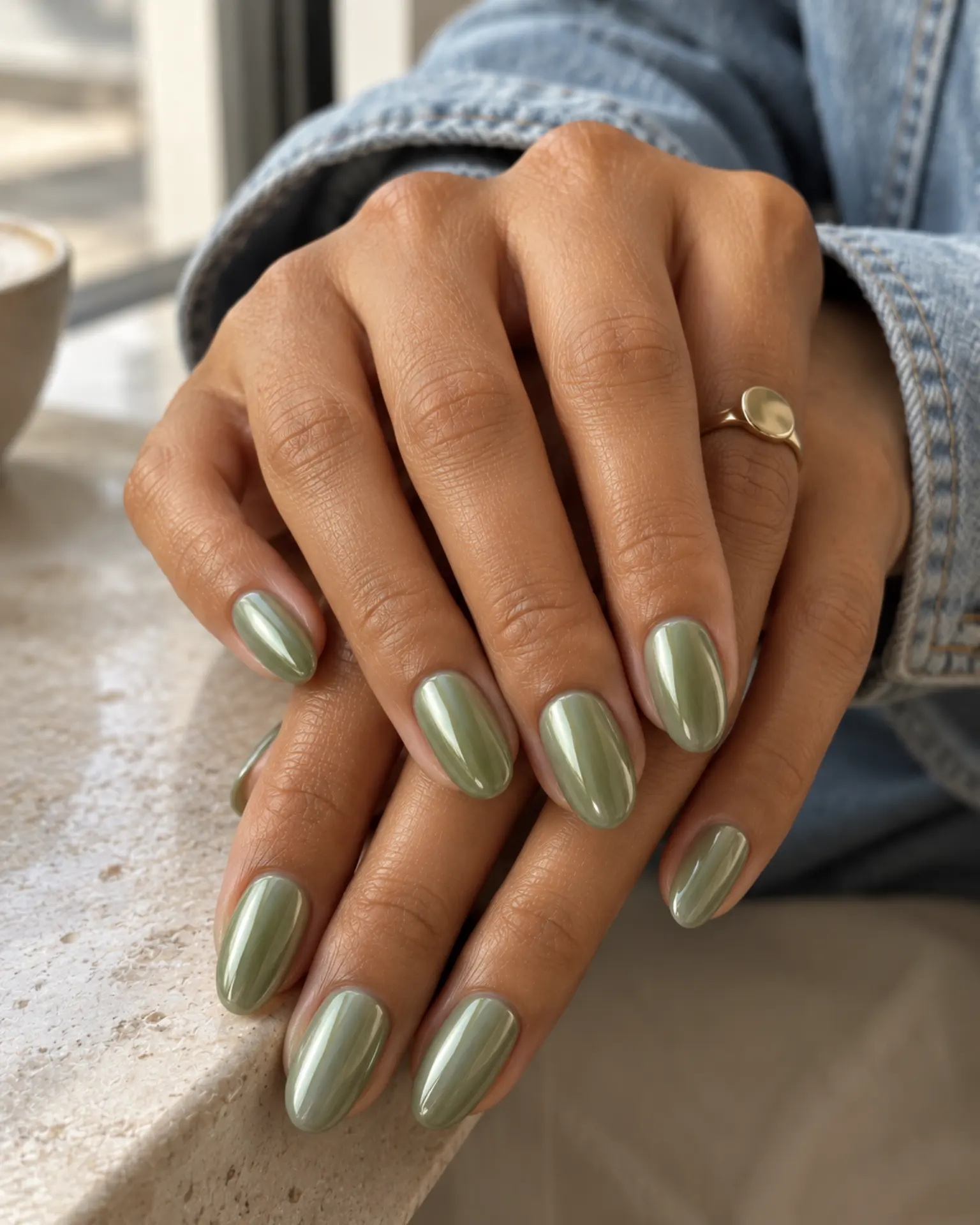
Sage Chrome Glaze feels more considered when you account for the shade: sage has a dusty, grayed green softness that works well in small accents. A smooth reflective finish changes character with the underlying base: pale colors look pearly, dark bases look more metallic. Match the accent size to the nail plate rather than forcing the same dimensions on every finger.
Olive Negative Space
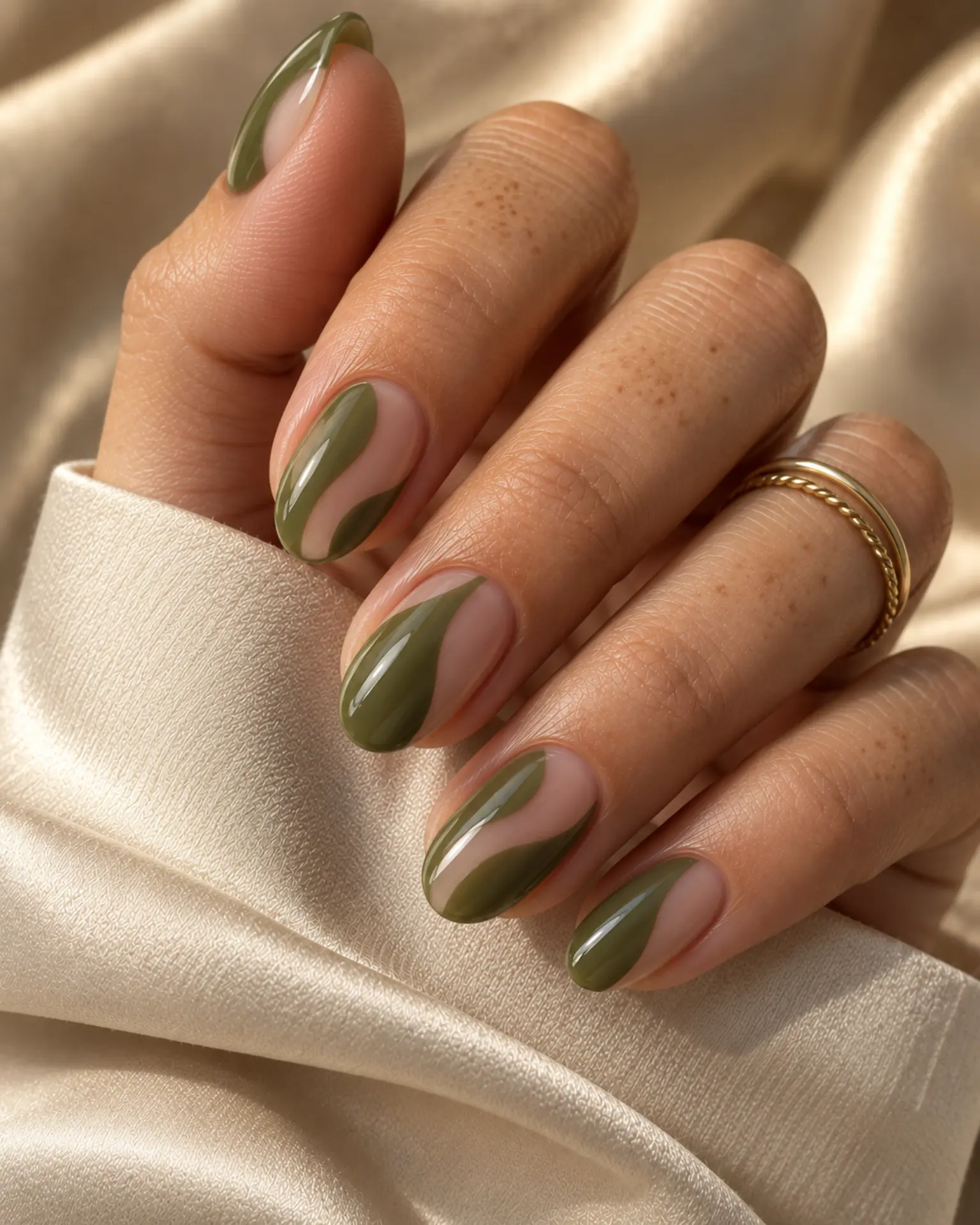
Clear or softly sheer sections give the colored area a graphic outline without making the entire nail opaque. Before adding extra details to Olive Negative Space, check the undertone. Olive has yellow-green warmth that pairs naturally with bronze or cream. Against a shorter shape, this detail can be scaled down without changing the color story.
Sage to Forest Green Tonal Mix
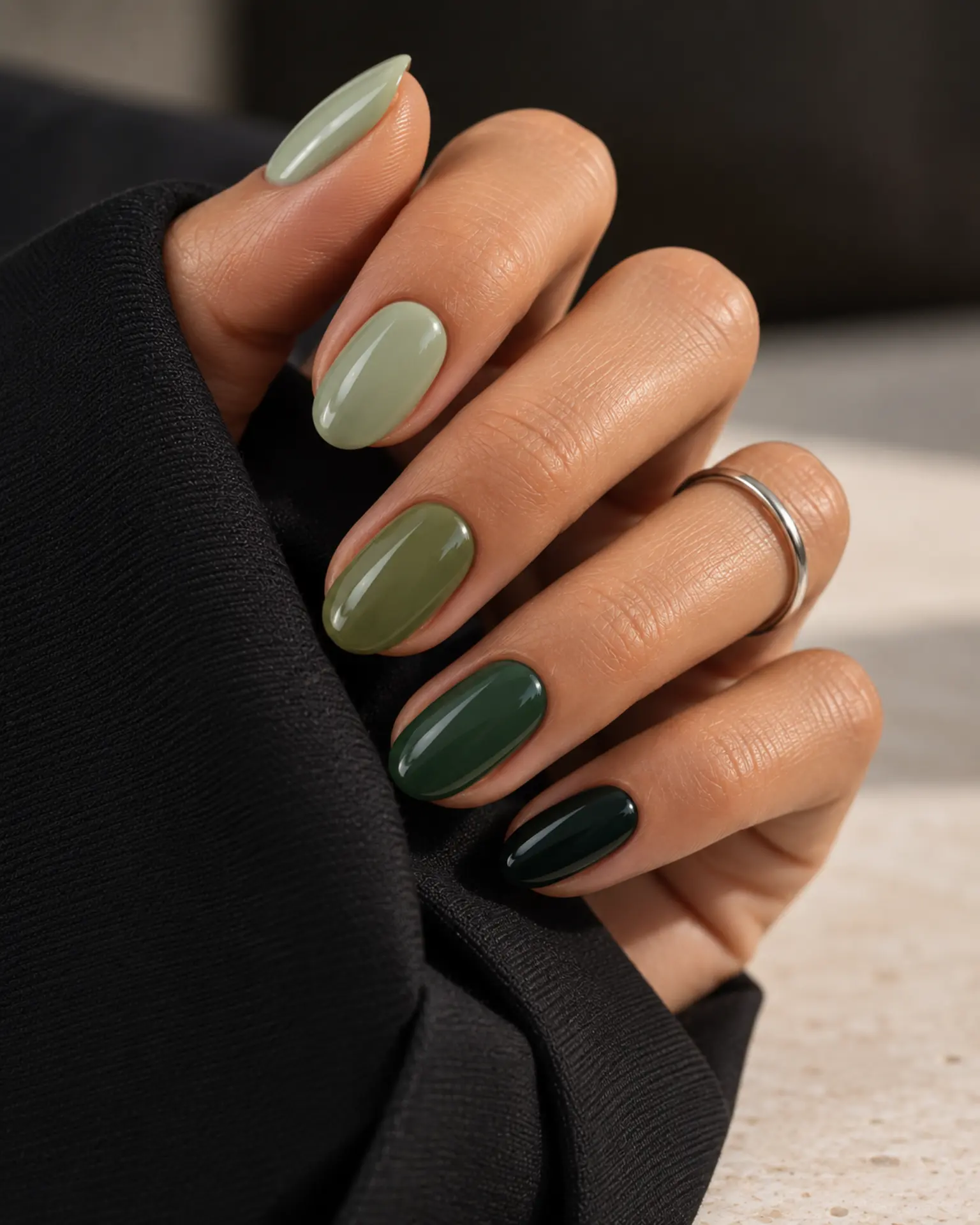
A tonal set reads best when the order of lighter and darker fingers is planned rather than improvised. For Sage to Forest Green Tonal Mix, remember that forest green is a deep pine shade that can look nearly black indoors. A clean base and even topcoat let the chosen undertone do more of the work.
Green Velvet Cat-Eye
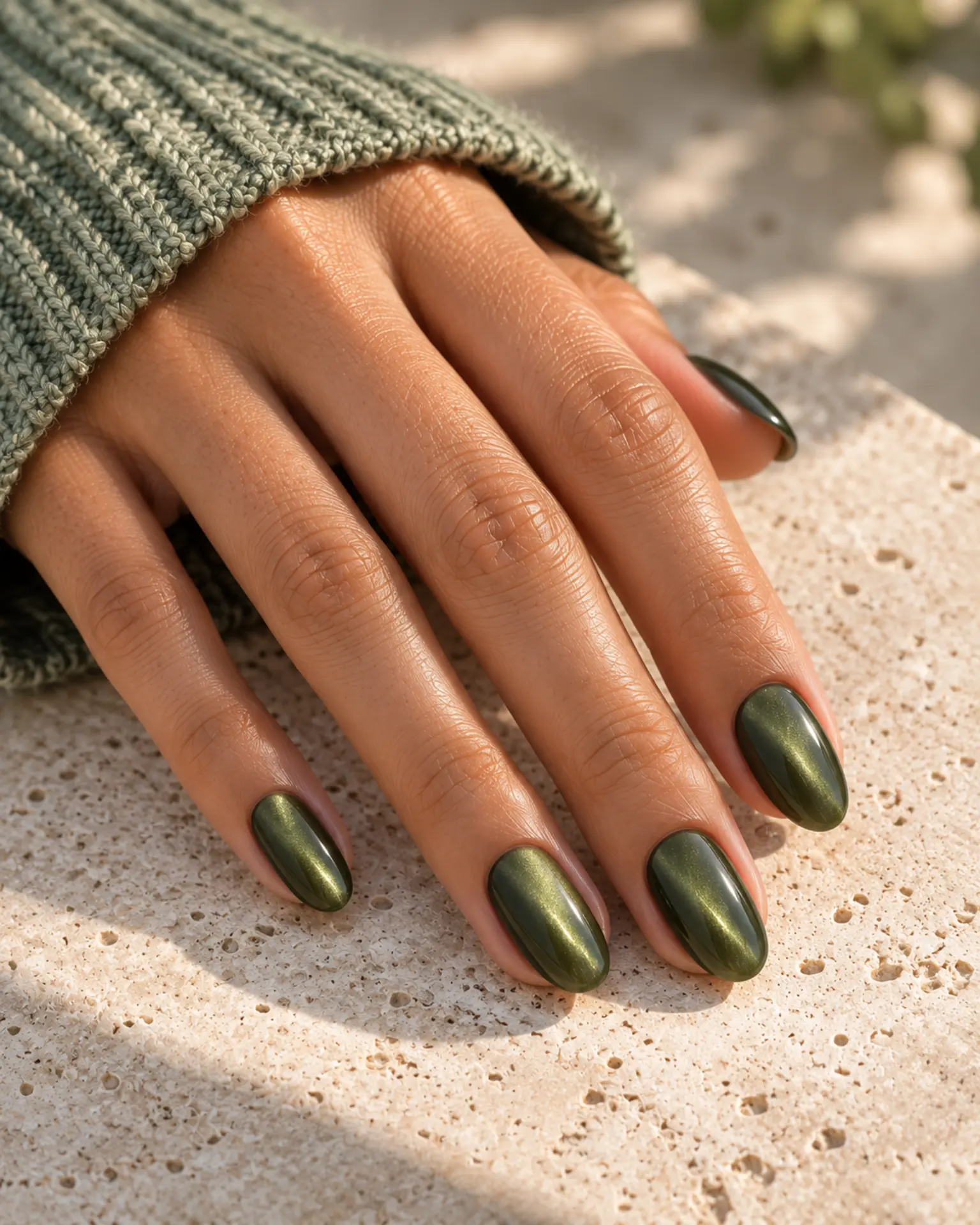
A magnetic shimmer forms a soft shifting beam when light moves across the nail. The direction of that beam is part of the design. Before adding extra details to Green Velvet Cat-Eye, check the undertone. Green shifts from muted and earthy to jewel-bright depending on undertone. Look from different angles before the polish is cured.
Green Micro French Edge
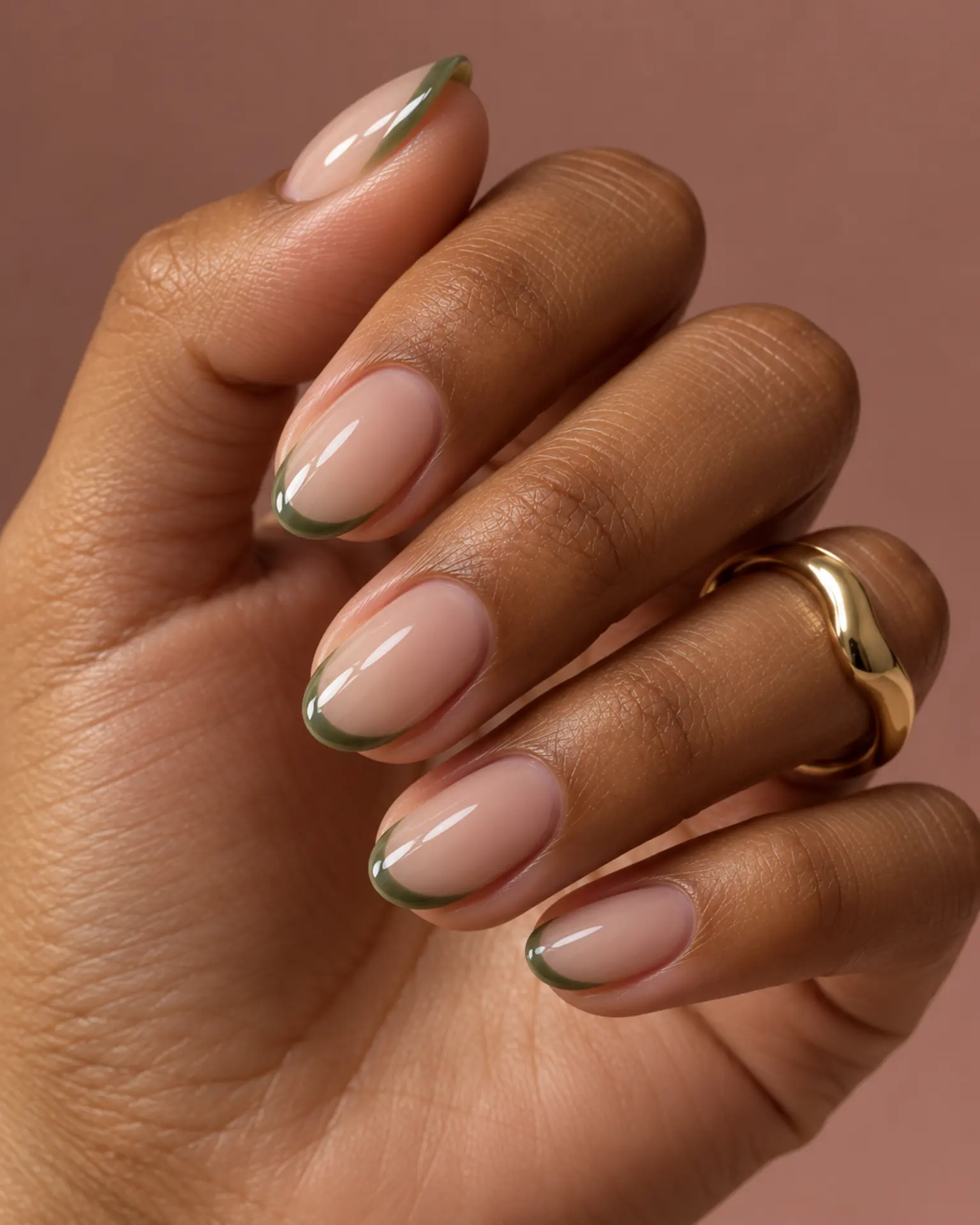
For Green Micro French Edge, remember that green shifts from muted and earthy to jewel-bright depending on undertone. A hairline of color at the very edge lets the base remain visible and makes even compact nails look tidy. Against a shorter shape, this detail can be scaled down without changing the color story.
Green Sheer Jelly Wash
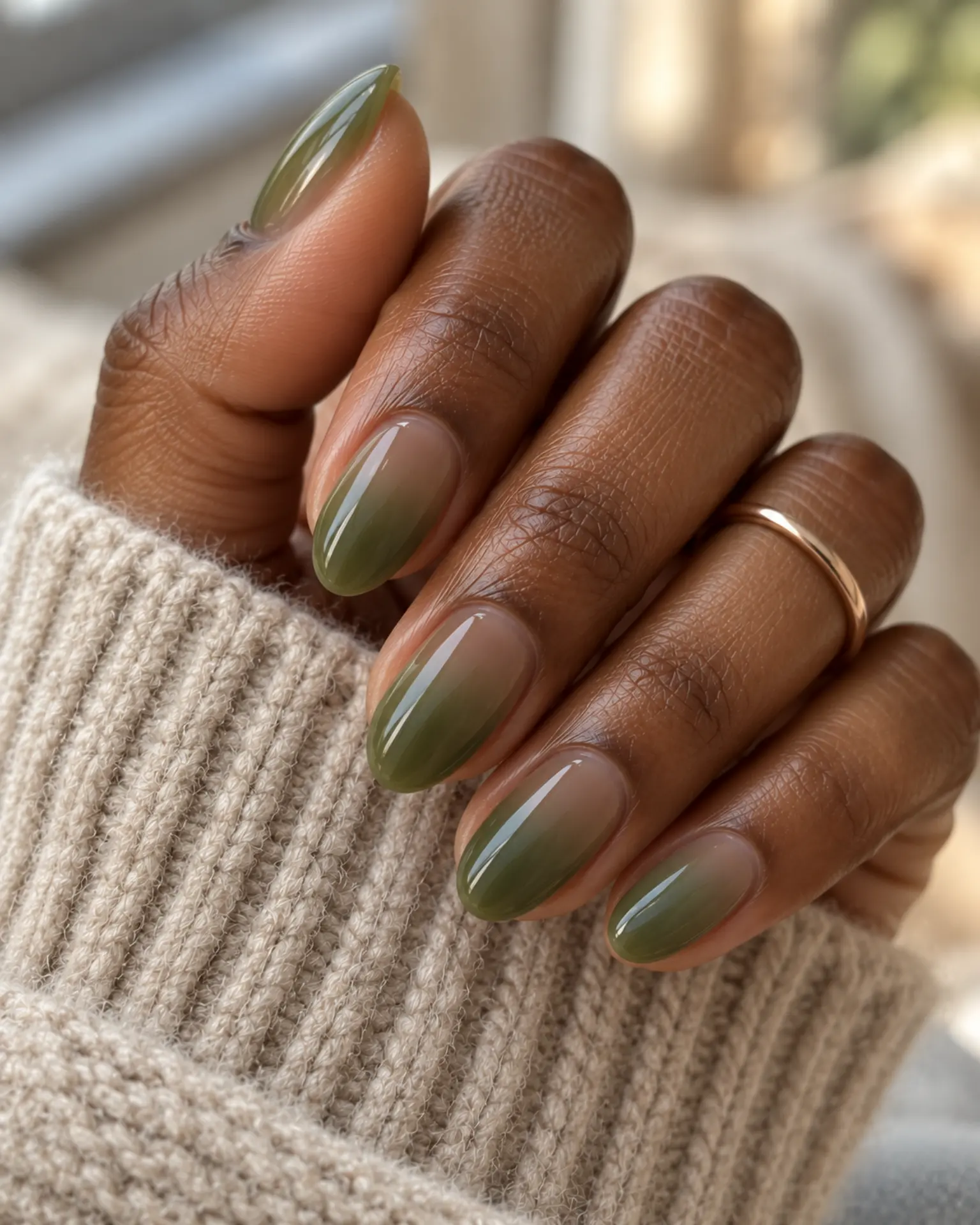
Translucent layers create a colored-glass effect rather than a solid opaque block. The nail underneath is meant to show through. Before adding extra details to Green Sheer Jelly Wash, check the undertone. Green shifts from muted and earthy to jewel-bright depending on undertone. Set the opacity target before the final coat.
Green Tonal Aura Fade
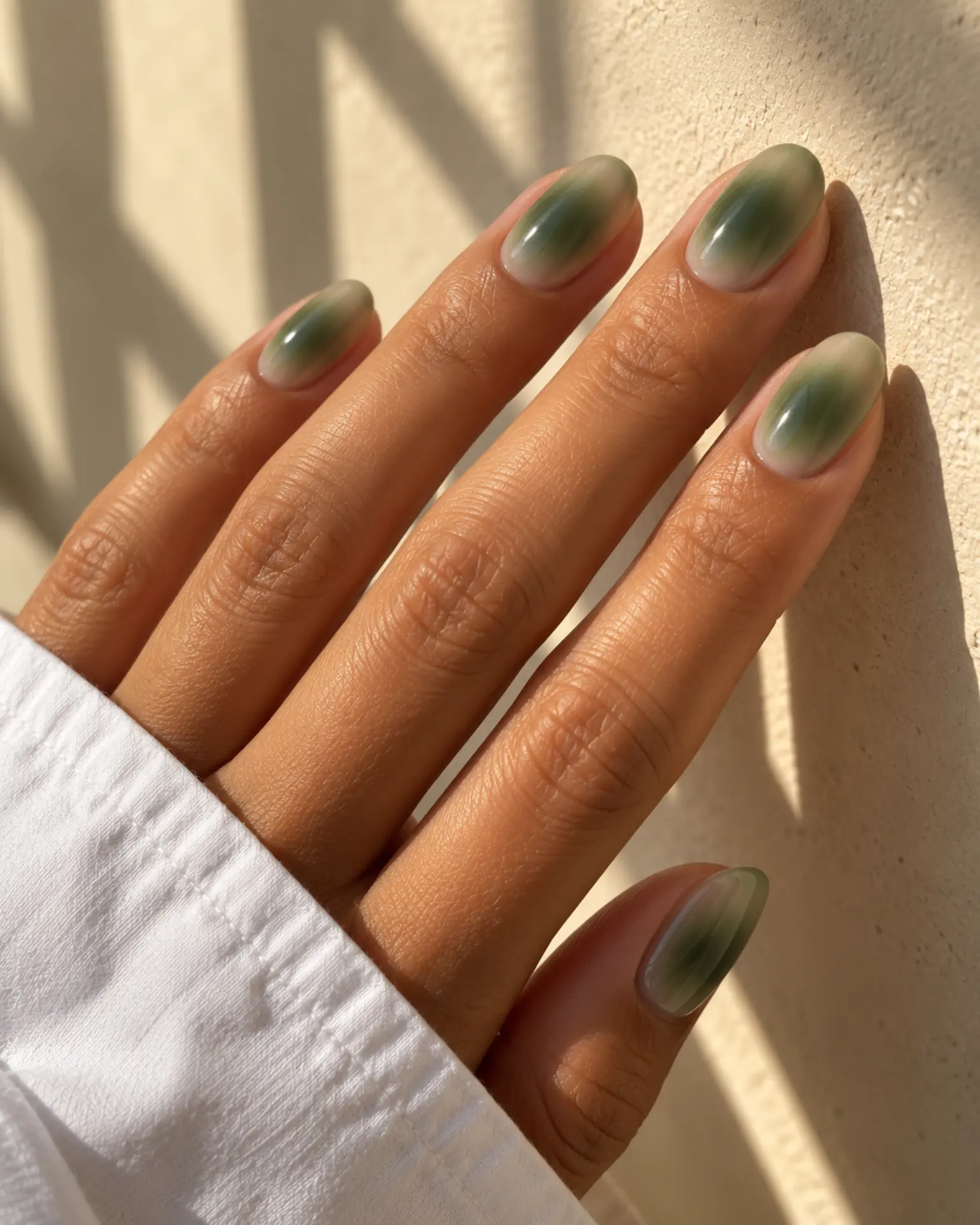
Before adding extra details to Green Tonal Aura Fade, check the undertone. Green shifts from muted and earthy to jewel-bright depending on undertone. A blurred center of color creates a glow that fades gently toward the edges, with no hard circular border. Ask for soft edges without an obvious ring.
Green Chrome Outline
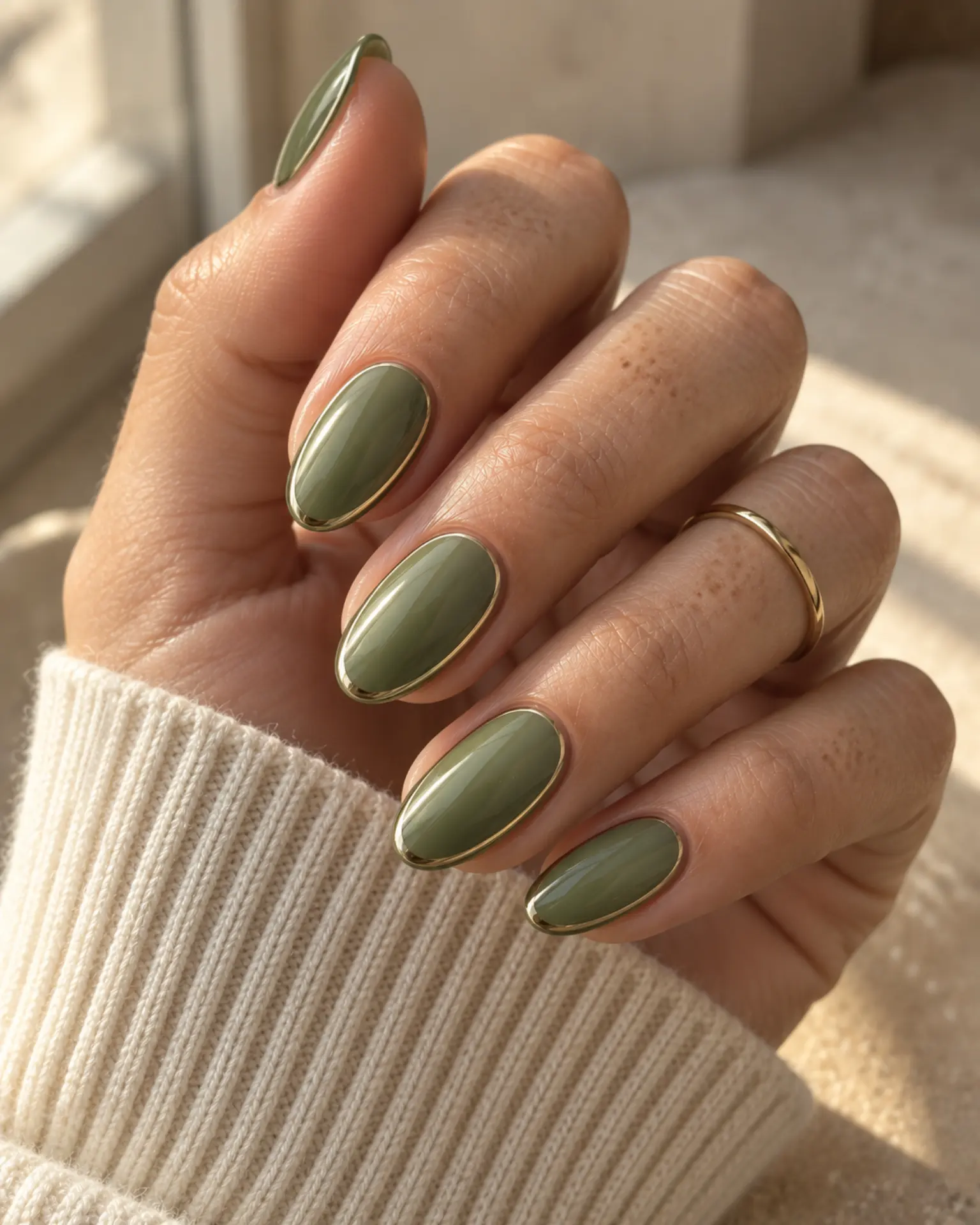
A smooth reflective finish changes character with the underlying base: pale colors look pearly, dark bases look more metallic. Before adding extra details to Green Chrome Outline, check the undertone. Green shifts from muted and earthy to jewel-bright depending on undertone. Against a shorter shape, this detail can be scaled down without changing the color story.
Green Negative-Space Curve
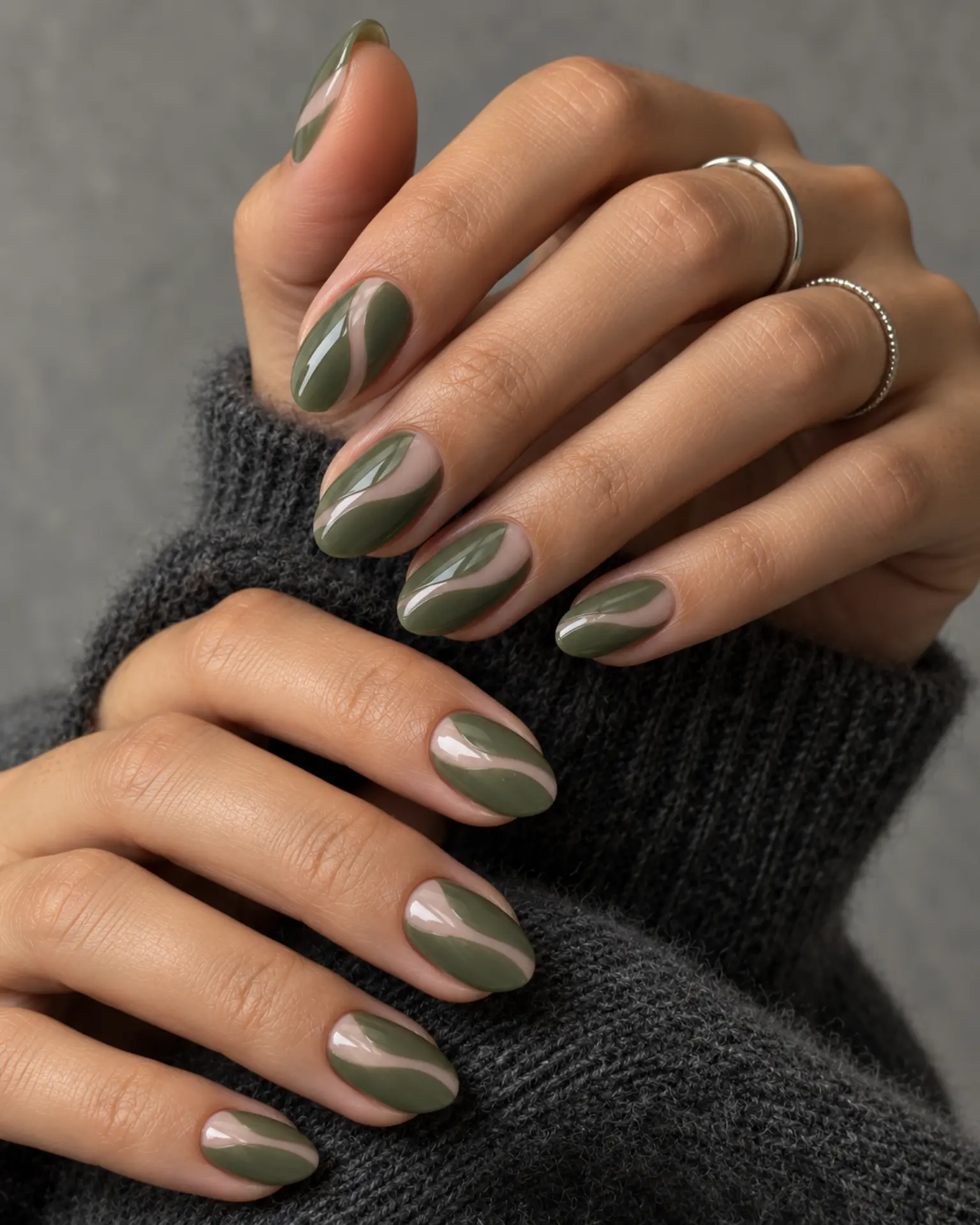
Leaving part of the nail deliberately open creates contrast through shape, not extra pigments. The border needs to be crisp. Green Negative-Space Curve feels more considered when you account for the shade: green shifts from muted and earthy to jewel-bright depending on undertone. A clean base and even topcoat let the chosen undertone do more of the work.
Green Glazed Pearl Veil
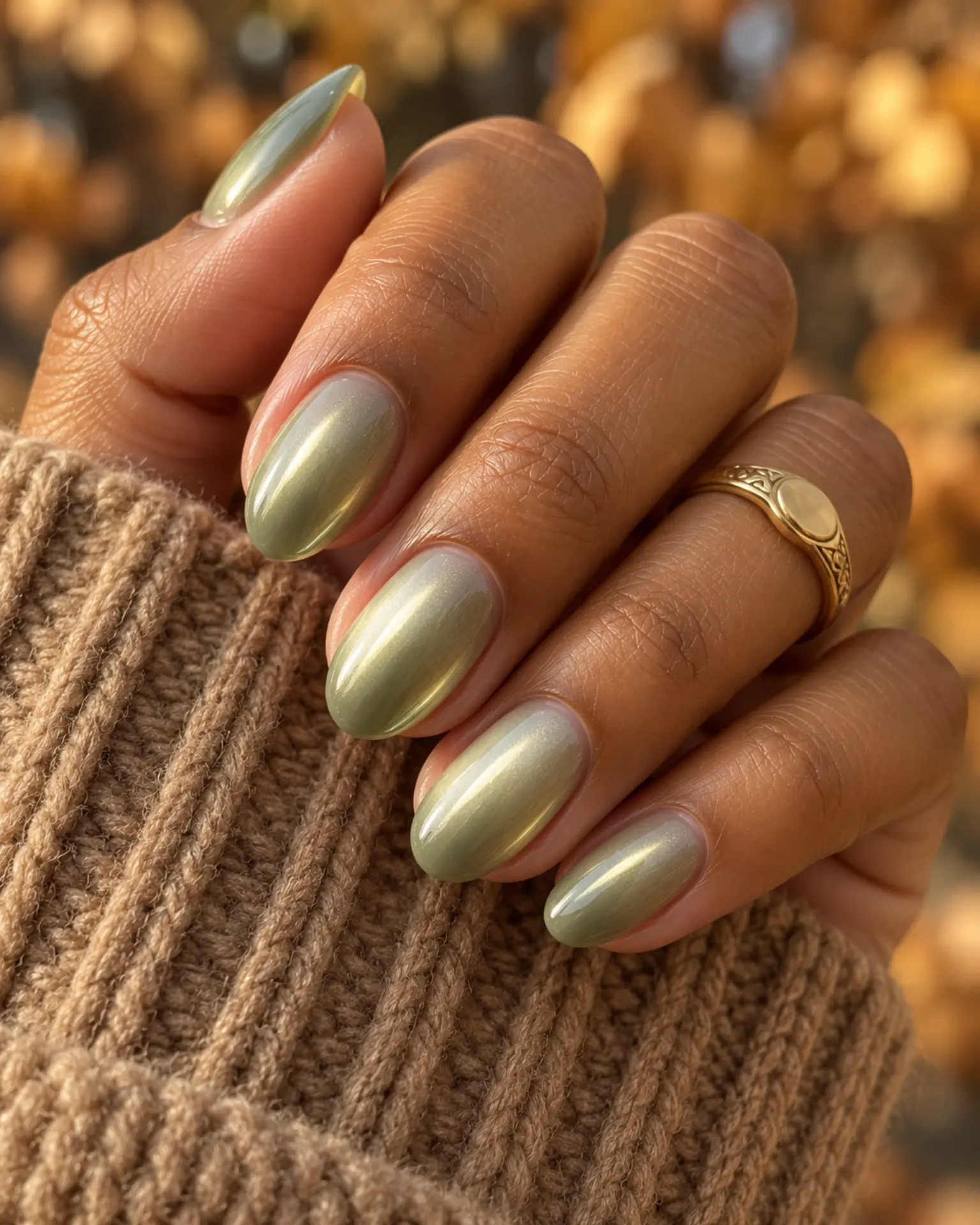
Before adding extra details to Green Glazed Pearl Veil, check the undertone. Pearl creates a softer shift of light than metallic foil. The glazed finish is a softer version of chrome, relying on a thin luminous layer and a tidy base. Match the accent size to the nail plate rather than forcing the same dimensions on every finger.
Green Tonal Ombré
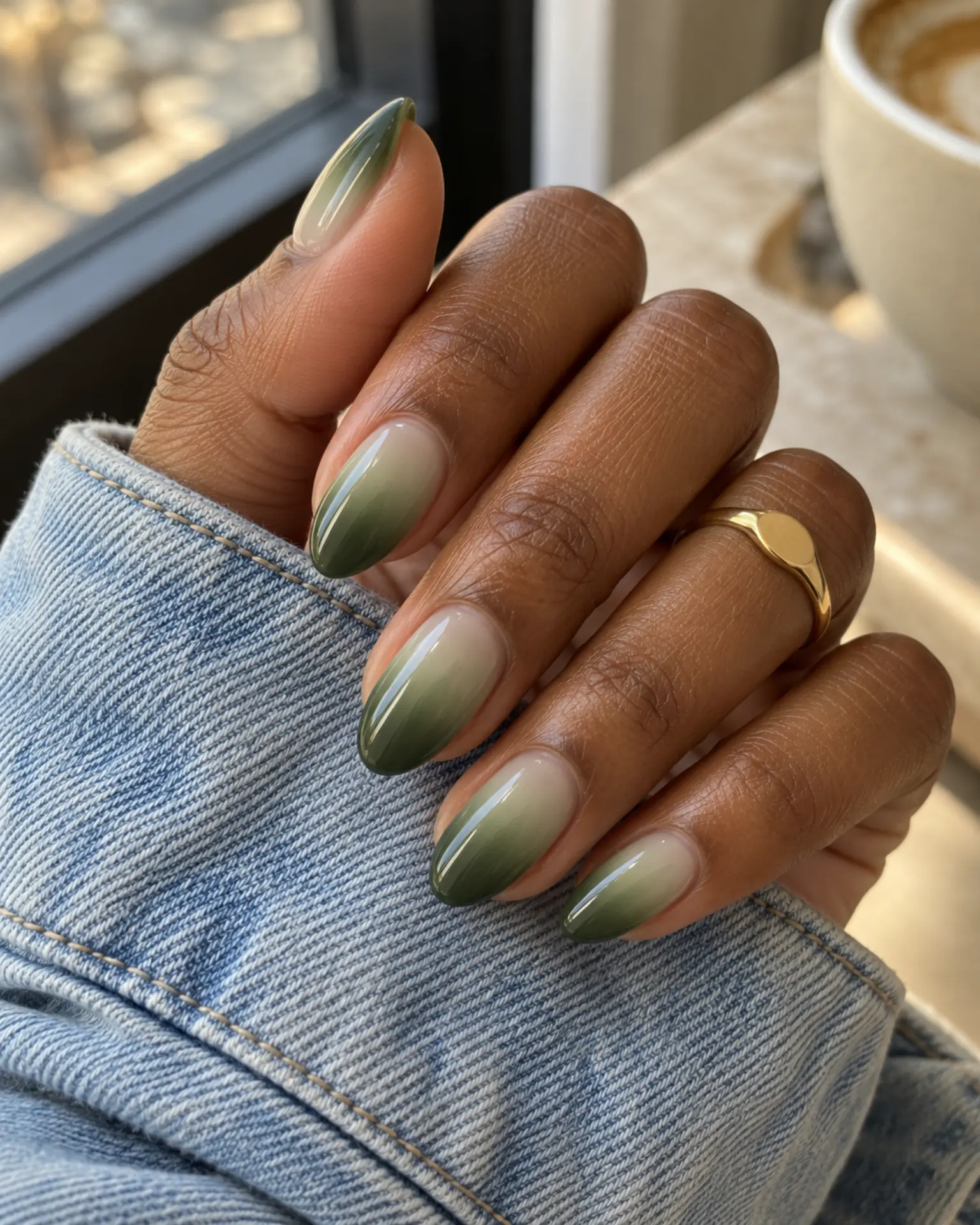
A smooth ombré needs a gradual transition; the fade should look deliberate even from the side of the finger. Before adding extra details to Green Tonal Ombré, check the undertone. Green shifts from muted and earthy to jewel-bright depending on undertone. Against a shorter shape, this detail can be scaled down without changing the color story.
Green Side-French Sweep
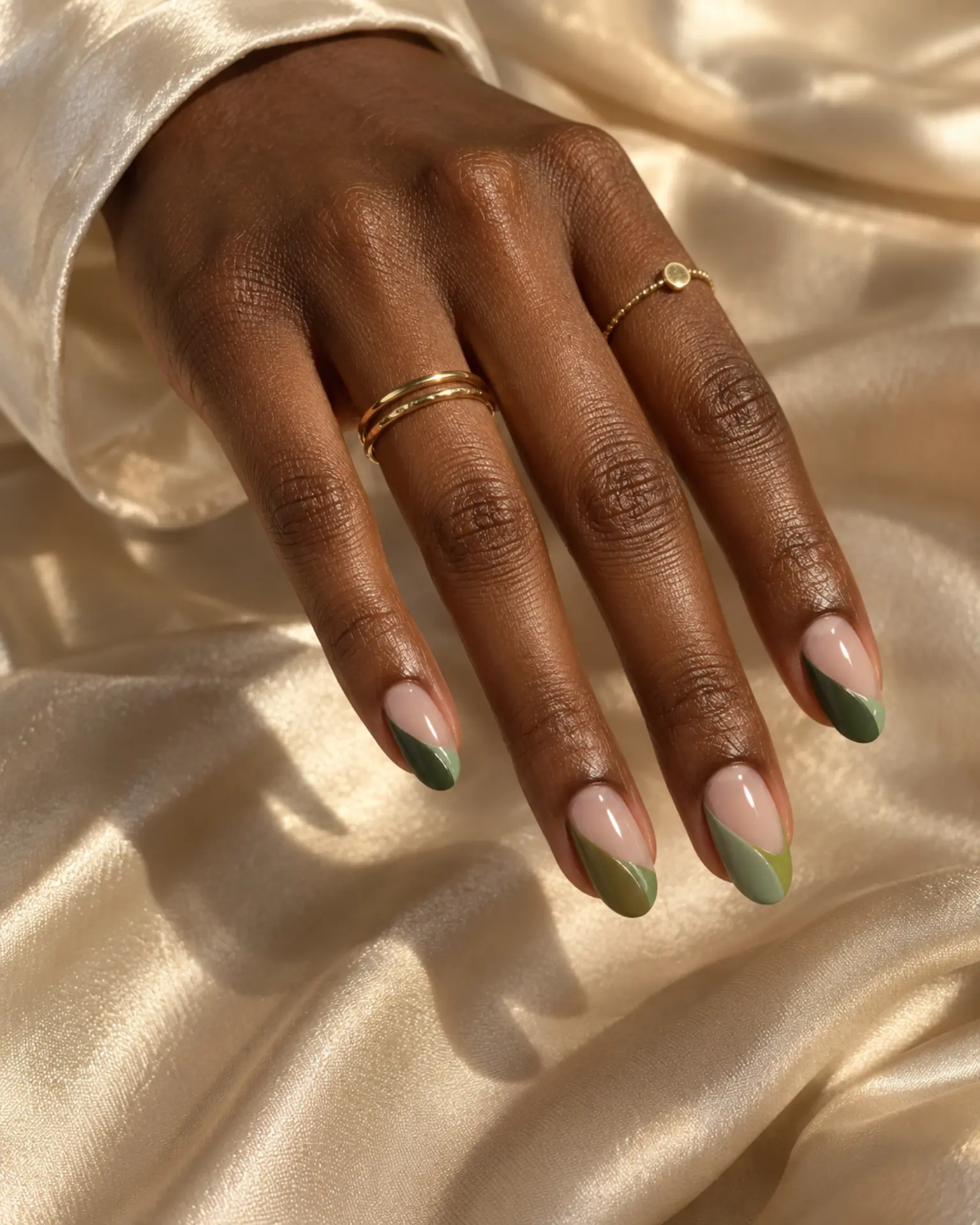
An off-center French edge follows one sidewall before tapering toward the tip. The diagonal direction can make the nail feel longer. For Green Side-French Sweep, remember that green shifts from muted and earthy to jewel-bright depending on undertone. Agree on which side carries the color so the two hands feel balanced.
Green Fine-Line Swirl
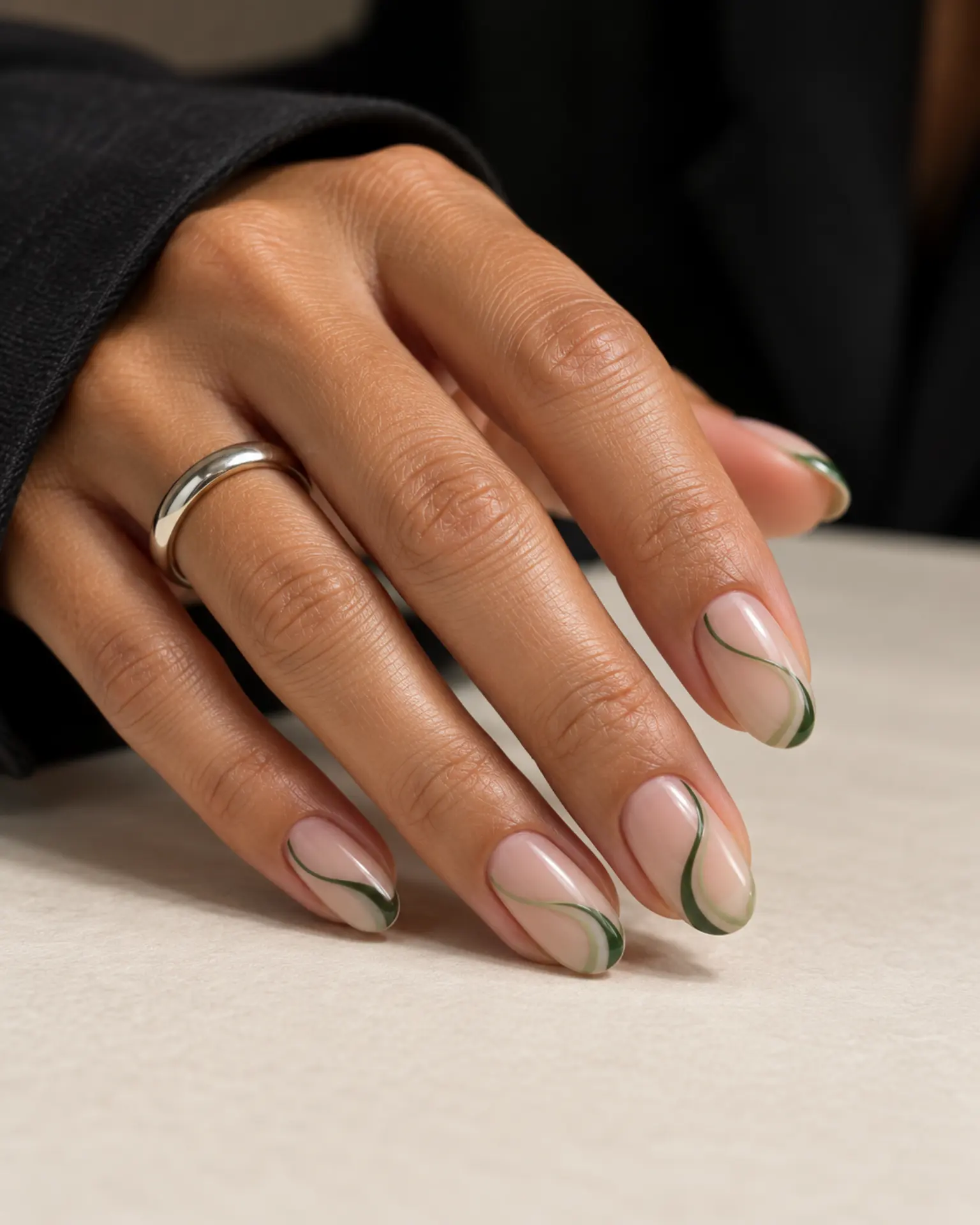
Green shifts from muted and earthy to jewel-bright depending on undertone. That is an important part of the look in Green Fine-Line Swirl. One flowing stroke creates movement along the nail, leaving space for the base color to show around it. Keep the stroke narrow enough for the nail size.
Green Matte + Gloss Tip
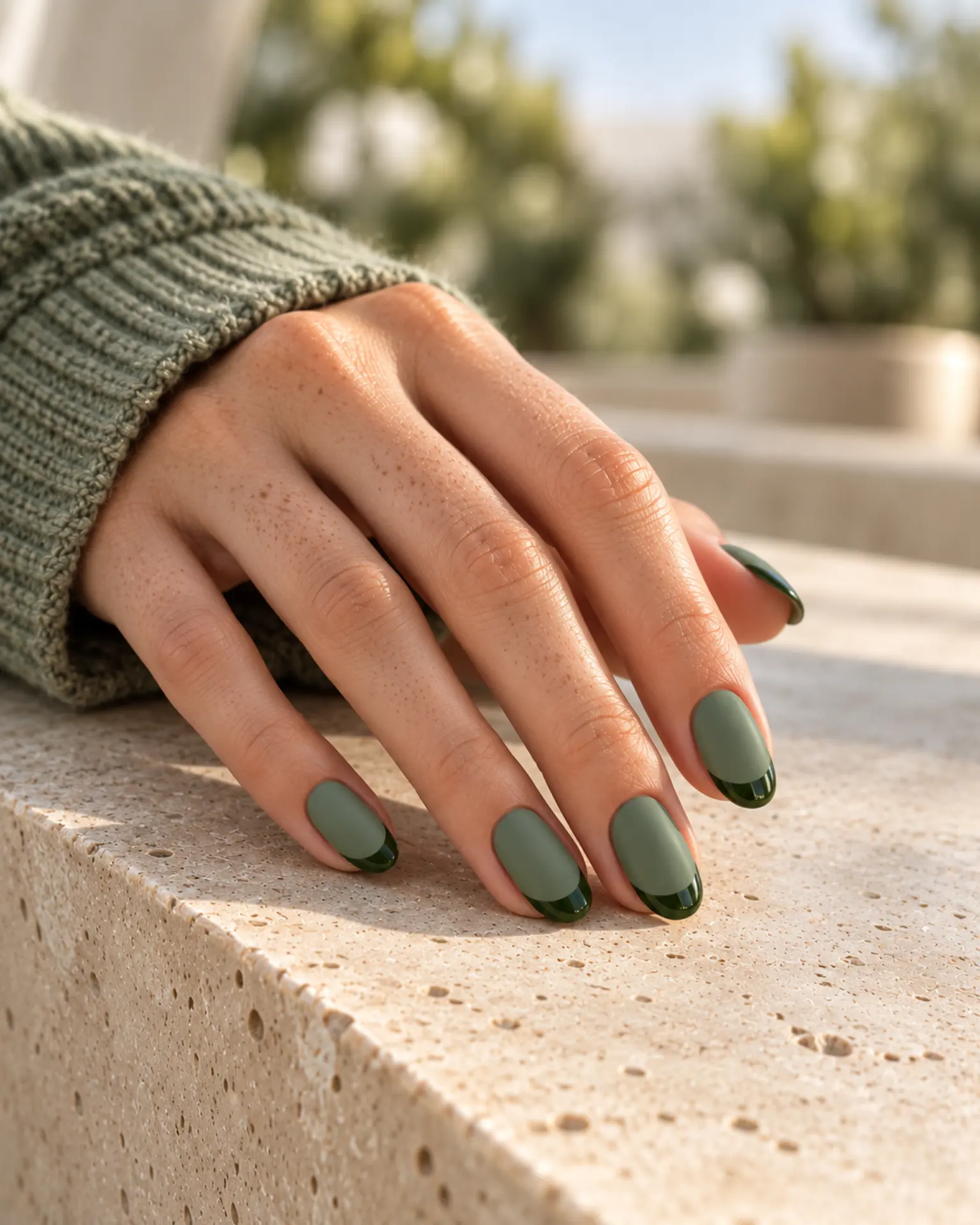
Glossy edges against a matte body create contrast without a second color. The border between finishes should stay crisp. Green shifts from muted and earthy to jewel-bright depending on undertone. That is an important part of the look in Green Matte + Gloss Tip. Confirm where topcoat should and should not go.
Green Half-Moon Detail
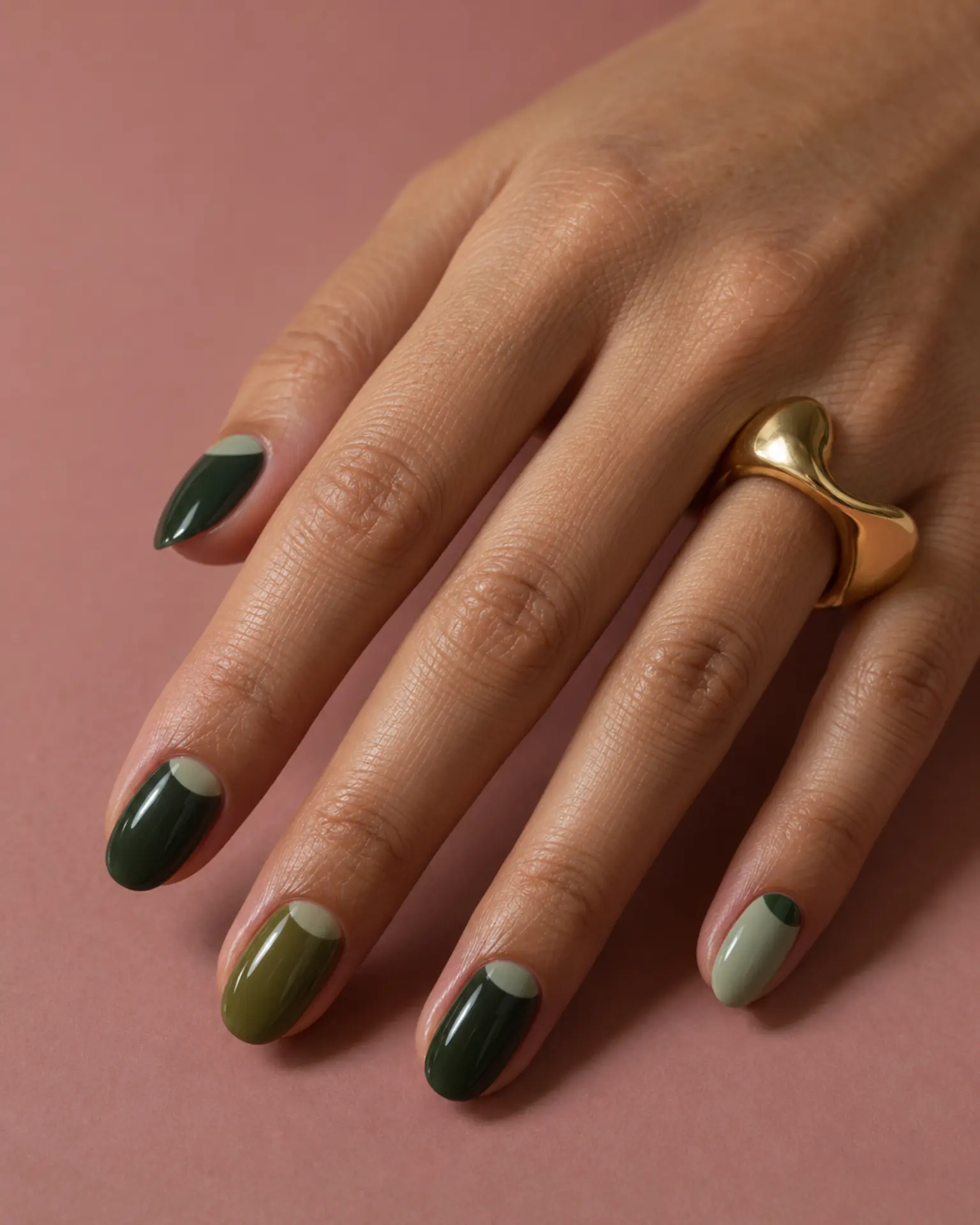
Green Half-Moon Detail feels more considered when you account for the shade: green shifts from muted and earthy to jewel-bright depending on undertone. The color sits in a narrow arc near the cuticle rather than at the free edge. A small, even gap makes that placement look clean. Keep the crescent shallow if your nail beds are short.
Green Reverse French
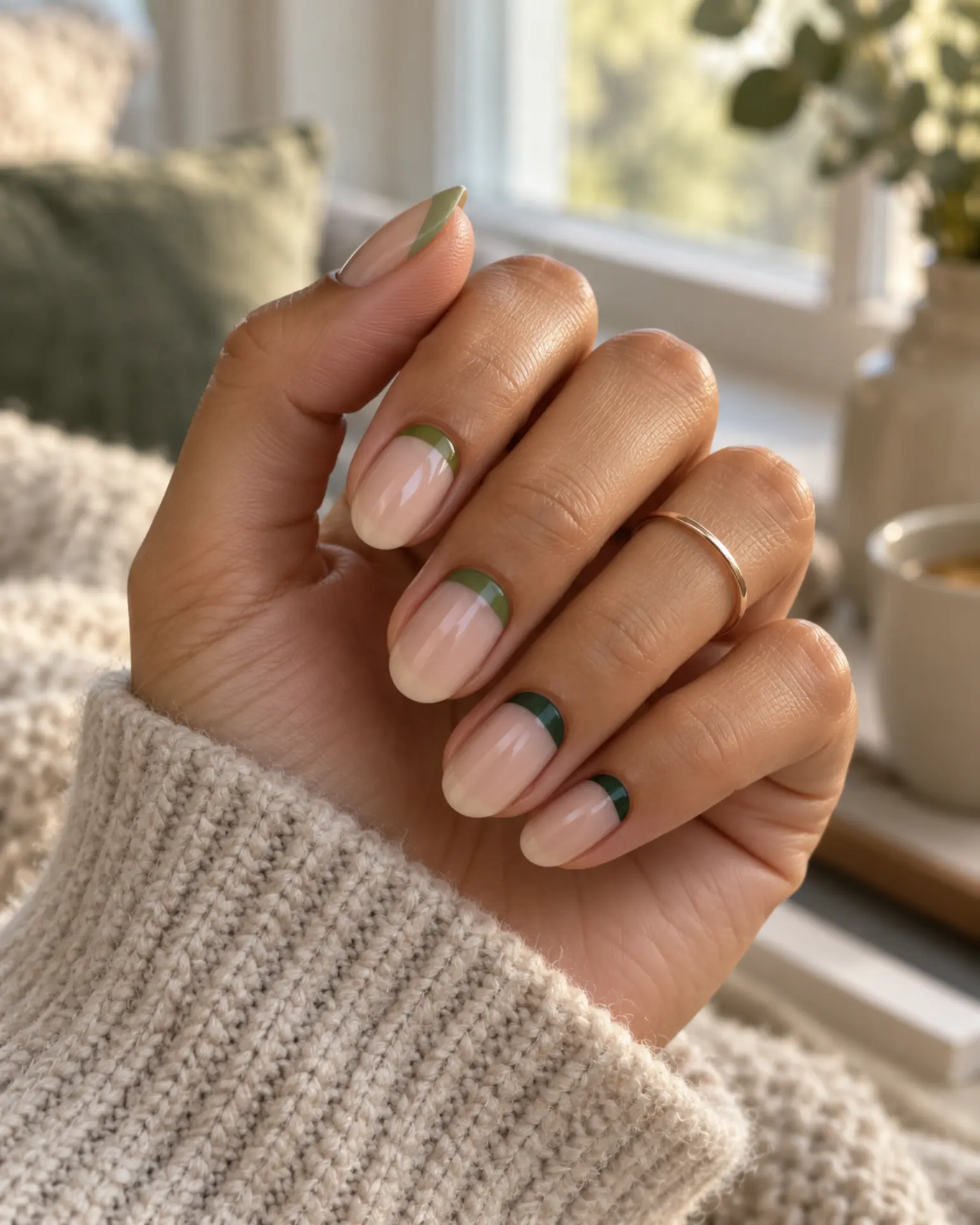
Green shifts from muted and earthy to jewel-bright depending on undertone. That is an important part of the look in Green Reverse French. A reverse French frames the nail base. Its curve should echo the cuticle shape instead of copying the width of a tip line. Keep the crescent shallow if your nail beds are short.
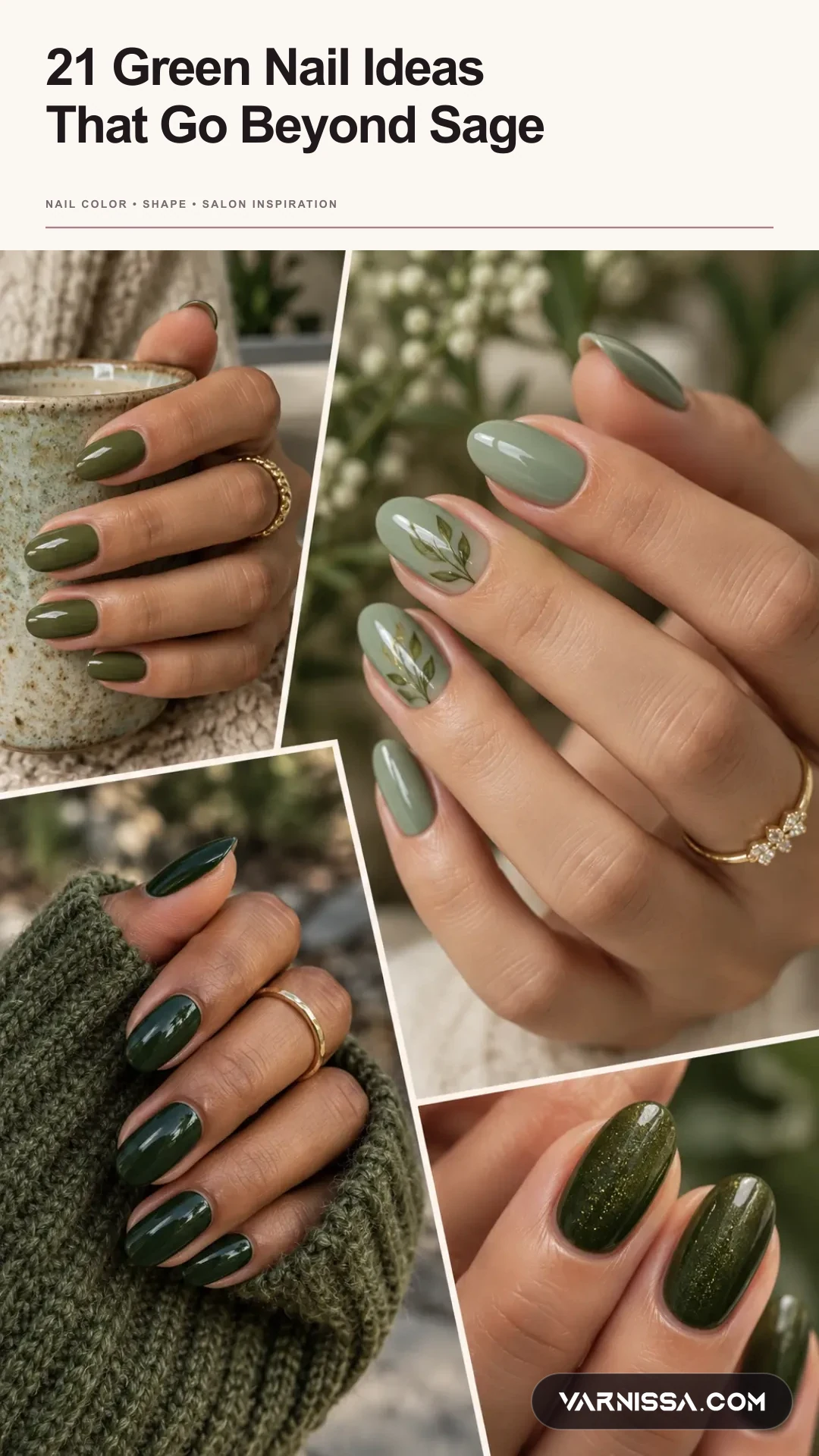
Keep this story on Pinterest.
The vertical Pin packages the article into one branded reference so you can come back to the full set before your appointment.
Questions about green nail ideas
What is the difference between sage, olive and emerald green nails?
Sage is muted and gray-leaning, olive is warmer and earthy, and emerald is saturated and jewel-toned. Swatching them beside your skin in daylight helps reveal the difference.
Are dark green nail designs suitable for short nails?
Yes. Deep forest green looks clean as a solid color on short squoval or rounded nails. If adding metallic lines or art, keep them fine and leave room around each detail.
Which colors pair well with green nail polish?
Cream, warm nude, gold and softly muted brown can complement olive and forest shades. For a fresh contrast, pair sage with translucent pink or a milky neutral.